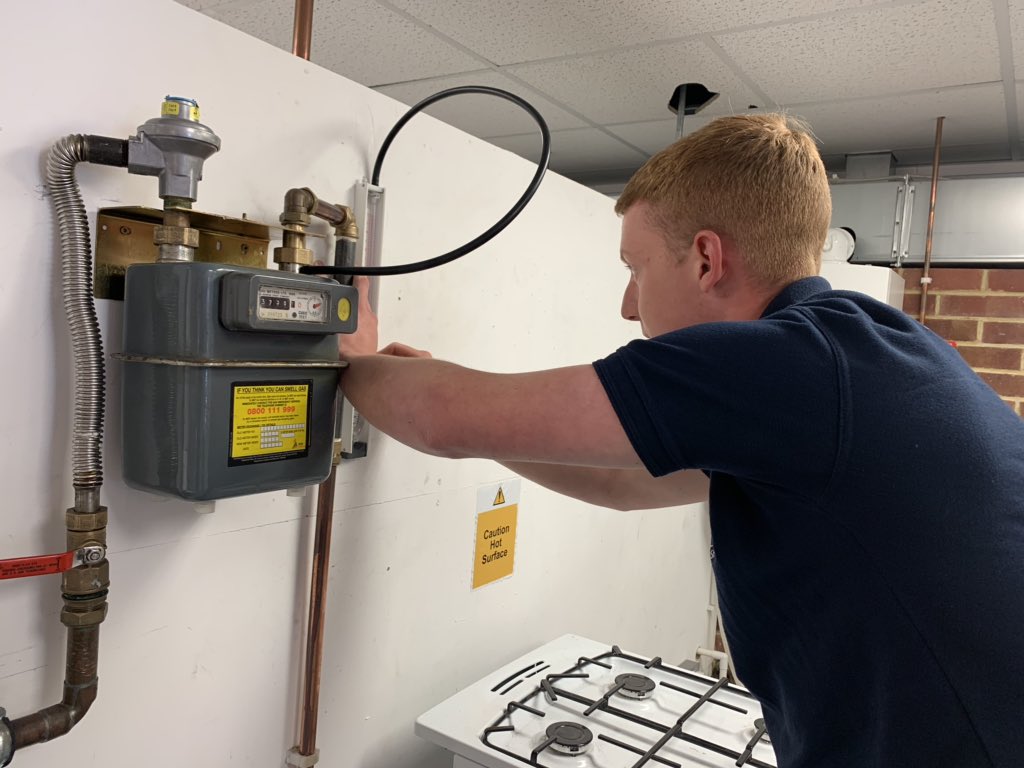
Gas training in Scotland at Nationwide Training Services helps new entrants start a gas career and qualified engineers keep their ACS certificates current. Our gas courses cover domestic gas safety, appliance qualifications, ACS renewals and progression into commercial gas and LPG. Courses are delivered in person at our training centre on Dunlop Square, Livingston, with practical sessions based on real site conditions. Engineers come to us from Glasgow, Edinburgh, Fife, Stirling, Dundee, Aberdeen, Inverness and across Scotland.
Gas Courses in Scotland at Our Livingston Training Centre
To work on gas legally in Scotland, you need ACS (Accredited Certification Scheme) qualifications and Gas Safe registration. Which course you need depends on where you are now. Some learners are starting from scratch, some are renewing certificates, and others want to add new appliances or move into commercial work.
We have over 20 years of experience delivering nationally recognised qualifications, and our gas pathway works with LCL Awards and BPEC. More than 500 learners have qualified with us, and our average course completion rate is 96%. You can read the full details of each course on our domestic gas training, or browse all gas training courses.
Gas Engineer Training in Scotland: Which Course Is Right for You?
Gas engineer training in Scotland is built around a set of recognised qualifications. Before you book, our team reviews your experience and confirms the right starting point, so you don’t pay for a course you don’t need.
New to Gas: Become a Gas Engineer in Scotland
If you want to become a gas engineer in Scotland and hold no gas qualifications yet, start with the LCL Awards Domestic Gas Managed Learning Programme. It combines classroom learning, practical workshop training on industry-standard equipment and supervised workplace experience, and you build a portfolio as you go. When you finish, you can sit your ACS assessments. The programme doesn’t give you Gas Safe registration on its own. You must pass the ACS assessments first.
Qualified Engineers: ACS Gas Training Scotland
If you already work in gas, our ACS gas training in Scotland lets you renew your certificates or add new appliance categories. The CCN1 Core Domestic Gas Safety qualification is the foundation for all domestic natural gas work. It covers gas legislation, tightness testing, purging, combustion, ventilation, meters and what to do in unsafe situations. You then add the appliance modules you need: CENWAT for central heating and hot water, CKR1 for cookers, HTR1 for gas fires and wall heaters, and CPA1 and MET1 to complete the typical domestic set.
Moving Into Commercial Gas or LPG
Engineers with domestic qualifications can progress into larger, more complex systems. Our commercial gas training starts with COCN1 and builds through modules such as CODNCO1, ICPN1, CIGA1 and the TPCP1 range. Kitchen specialists can take CMET1 Core Safety for catering appliances. If you hold CCN1 and work in rural or off-grid areas, our ACS LPG changeover programme covers permanent dwellings, residential park homes and leisure accommodation. For a closer look at the commercial route, see our Commercial Gas Training Livingston.
Gas Safe Training in Scotland: How ACS Leads to Registration
Many people search for “Gas Safe training Scotland”. The Gas Safe Register doesn’t run courses itself. It’s the official register of engineers allowed to work on gas in Great Britain, and ACS qualifications are the direct route to joining it. In practice, Gas Safe training means ACS training and assessment from an accredited centre.
ACS certificates are valid for five years, then reassessment is required. Reassessments can often be completed within a few days, while full training packages take longer. Planning your renewals early helps you avoid gaps in the work you can legally carry out. Once you qualify, our team explains what Gas Safe registration involves and helps you take the next step.
How Gas Training Works
The process is straightforward, and the team guides you through each stage. First comes a free consultation, where we review your current qualifications and suggest the right pathway. You then enrol and choose dates, with regular cohorts running through the year at our Livingston centre. Training and assessment combine hands-on practice with theory, led by trainers and assessors who hold industry qualifications. You finish with recognised certification and support with Gas Safe registration where relevant.
To see how gas training links with oil, LPG, electrical and renewables, take a look at our training pathways.
Gas Courses for Learners Across Scotland
Our centre sits in Livingston, between Edinburgh and Glasgow, which makes it a practical base for engineers across Scotland. Learners travel to us from Edinburgh, the Lothians and the Borders; from Glasgow, Lanarkshire, Renfrewshire and Ayrshire; from Falkirk, Stirling and Fife; and from Dundee, Perth, Aberdeen, Inverness and the Highlands. If you’re local, our Gas Training in Livingston covers courses for West Lothian.
Gas training is mainly in person, because practical skills need practical assessment, though some elements are online depending on the qualification. Employers can book through us too. Housing associations, councils and contractors upskilling several engineers can arrange group bookings and tailored packages. You can read more about who we work with on our About.
Why Train With Nationwide Training Services
Good training should prepare you for real work, not just an assessment. Our approach is structured and practical, and every programme is led by instructors who know the sector. Our qualifications come through recognised awarding bodies, and you’ll find more detail on our accreditations . Every certificate we issue carries a unique verification ID and QR code. And because we advise you on the right qualification for your experience, you aren’t left guessing which course to book.
Frequently Asked Questions
What is gas training?
Gas training gives you the knowledge and practical skills to work safely on gas appliances and installations. It leads to ACS qualifications, which you need for Gas Safe registration.
What qualifications do I need to become a gas engineer in Scotland?
You need CCN1 plus the appliance modules for the work you do, such as CENWAT, CKR1, HTR1, CPA1 and MET1. You also need Gas Safe registration. Our team can advise which ones suit your role.
Can I train as a gas engineer with no experience?
Yes. The Domestic Gas Managed Learning Programme is designed for people with no existing gas qualifications.
How long do ACS qualifications last?
ACS certificates are valid for five years. You then need reassessment to stay compliant.
Where can I find gas courses in Scotland near me?
Our training centre in Livingston delivers courses in person for learners from across Scotland. Contact us to check dates and availability.
Are the courses in person or online?
Our courses are mainly in person, with some elements available online depending on the qualification.
How much do gas courses cost?
Fees vary by course, so please contact us for current pricing. We don’t currently offer finance or payment plans, so it’s worth speaking to the team before you book.
Book Your Gas Training in Scotland
If you’re ready to take the next step, speak to our team about availability and the right course for your experience. Call 01506 418798, email in**@***************************co.uk, or use our contact. Our lines are open Monday to Friday, 9am to 5pm, and we’ll help you choose the right route into gas training in Scotland.