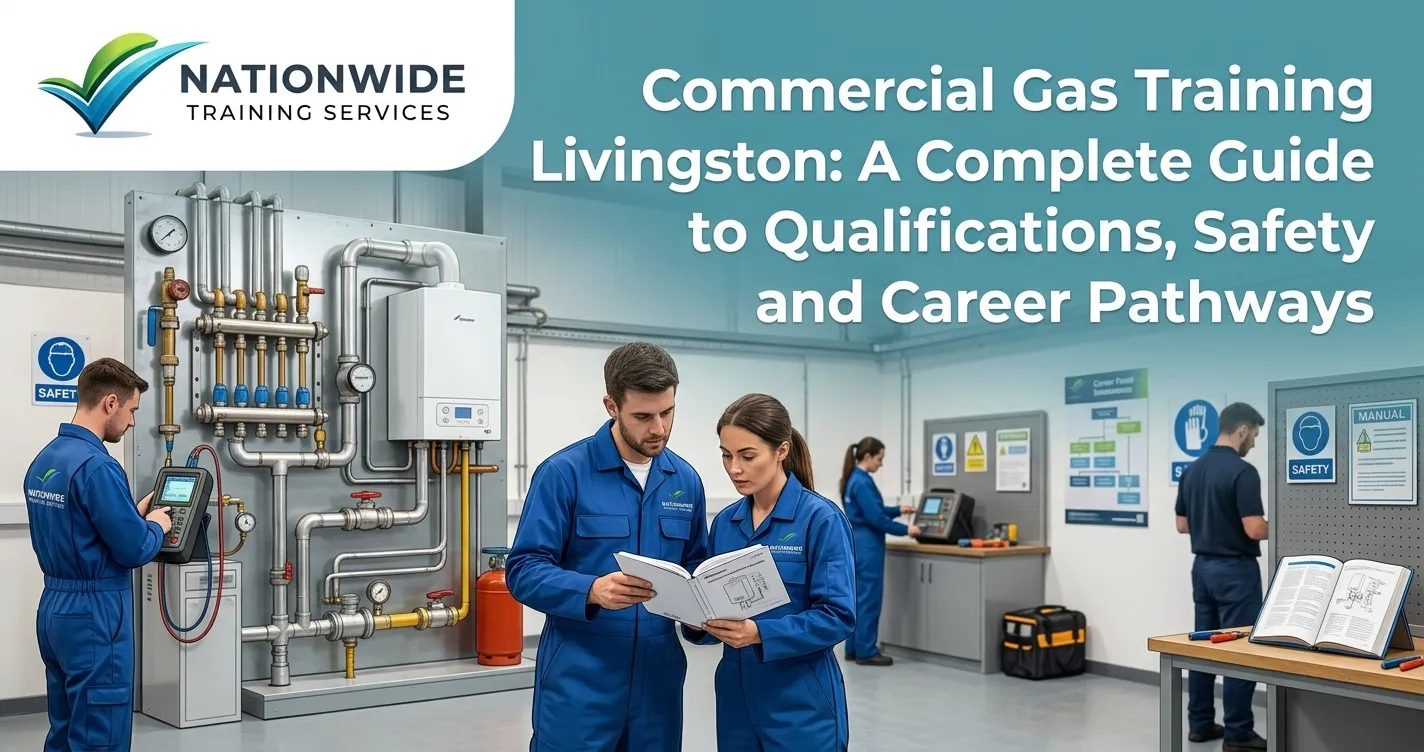
Gas appliances power kitchens, boilers, laundries and heating plants in almost every working building, and the engineers who maintain them need specialist skills. If you want to work safely and legally in restaurants, hotels, care homes, schools or workshops, Commercial Gas Training Livingston is the right place to start. Commercial systems are larger, more complex and more heavily regulated than household installations. This guide explains what the training covers, who needs it, how the qualifications work and how to choose a provider. It draws on the standards followed by Nationwide Training Services and on the UK’s gas safety framework.
Commercial gas work covers the installation, maintenance, testing and repair of gas pipework and appliances in non-domestic premises. Typical examples include catering equipment, large boilers, water heaters, space heaters and laundry equipment.
Commercial gas training teaches engineers to work safely on larger, higher-output gas systems in business premises, and prepares them for the assessments that prove their competence.
Commercial systems differ from domestic ones in several ways:
In Great Britain, anyone carrying out gas work must be on the Gas Safe Register for the type of work they do. Specific training is therefore a legal and safety requirement, not an optional extra.
Livingston is one of West Lothian’s main business centres, with retail parks, hotels, food outlets, schools and light industry. Each of these relies on gas equipment that must be installed and serviced correctly. Skilled local engineers help duty holders meet their obligations under the Gas Safety (Installation and Use) Regulations 1998. They also lower the risk of gas leaks, carbon monoxide incidents and unplanned shutdowns.
For engineers, local training means practical learning close to home and a clearer route to local work. For businesses, it means access to competent professionals who understand the premises around them.
Commercial Gas Safety Training Livingston is normally built around three layers of learning.
You learn the foundations of safe gas work: gas law and regulations, combustion principles, ventilation requirements, flue systems, tightness testing and purging, and emergency procedures. This knowledge underpins every later assessment.
Commercial appliances are assessed by type. Depending on your career goals, you may train on catering appliances, commercial boilers, water heaters, space heaters or laundry equipment. Each area has its own installation, commissioning and fault-finding requirements.
Most engineers prove their competence through the Accredited Certification Scheme (ACS). Assessment combines practical tasks with knowledge questions. ACS certification is generally valid for five years before reassessment, so planning your renewal is part of long-term career management. For a deeper look, read this guide to ACS qualifications and gas careers.
Commercial Gas Qualifications Livingston suit several types of learner:
If you are new to the trade, a structured route matters. Most providers expect you to hold, or complete, core gas safety assessments first, and prior domestic experience is often an advantage. Always confirm the current entry requirements with your chosen centre. You can also explore the available training pathways to see how one qualification leads to the next.
Strong Commercial Gas Engineer Training Livingston should combine classroom theory with hands-on workshop time. Look for these features:
Some providers also offer flexible online training for the theory elements. This can help working engineers fit study around their jobs, although practical assessments still happen in person.
Selecting the right centre affects both your results and your confidence on the job. When comparing options for Commercial Gas Training Livingston, check the following:
Nationwide Training Services publishes its training information openly, and you can contact the team with specific questions about your situation.
Gas competence rarely stands alone. Many engineers combine Commercial Gas Certification Courses Livingston with complementary skills that widen their service offering:
Multi-skilled engineers are easier to place with employers and more attractive to clients who prefer a single contractor for several services.
Commercial Gas Training Courses Scotland open doors across hospitality, healthcare, education, manufacturing and facilities management. Completing Commercial Gas Training Livingston can lead to several outcomes:
As buildings adopt new technologies, demand for engineers who understand both traditional gas systems and wider building services is likely to remain strong.
Yes. In Great Britain, anyone carrying out gas work must be registered with Gas Safe for the relevant type of work. Training and assessment are what allow you to demonstrate that competence.
ACS certification is generally valid for five years. After that, engineers must be reassessed to keep their competence current.
No. Domestic and commercial work require different competencies, appliance knowledge and assessments. Many engineers qualify in domestic gas first and add commercial specialisms later.
Check the frequently asked questions for common answers, or contact the training centre directly to discuss availability and entry requirements.
Working on commercial gas systems carries serious responsibility, and the right training protects engineers, businesses and the public. By understanding the legal framework, the qualification routes and what a quality course looks like, you can make a confident choice about your next step. Commercial Gas Training Livingston gives local engineers a clear path from foundation knowledge to recognised, assessed competence. Whether you are expanding from domestic work or starting a new career, Nationwide Training Services can help you plan a route that fits your goals. Regulations and requirements can change, so always check current guidance from the Gas Safe Register and the Health and Safety Executive before you enrol.