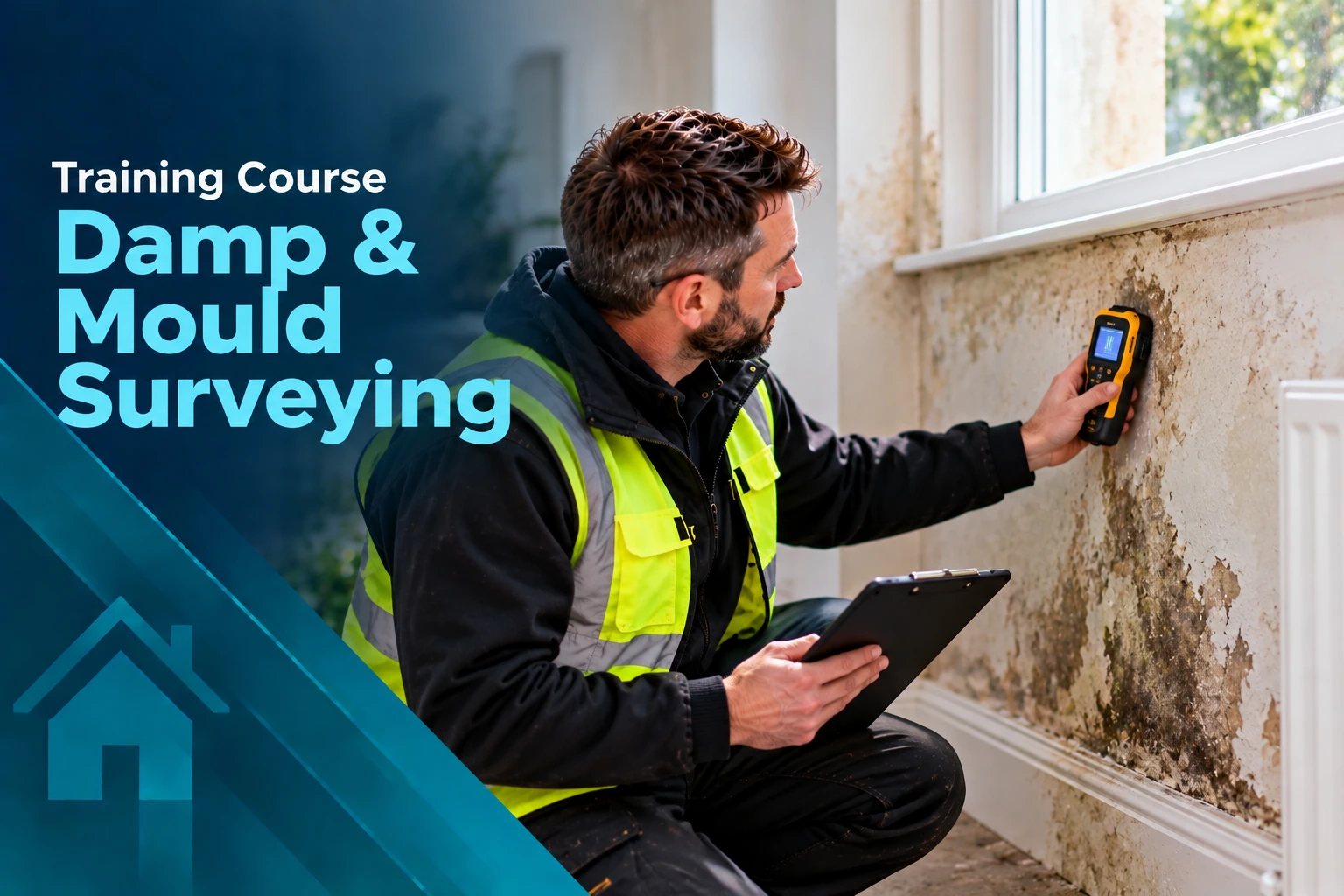
The Damp & Mould Surveying course is designed for professionals who need to identify, assess and report on damp, condensation and mould problems within residential properties. The course provides the knowledge and practical understanding required to investigate common moisture-related defects and determine the factors contributing to poor internal conditions.
Throughout the programme, delegates will develop an understanding of the different forms of damp found within buildings, including condensation, penetrating damp and rising damp. Training explores how building construction, ventilation, heating, occupancy, moisture generation and property defects can contribute to damp and mould growth.
Delegates will learn how to approach a property survey systematically, using visual inspection techniques and appropriate diagnostic equipment to gather evidence. The course also covers moisture measurement, ventilation assessment, identification of mould growth and the importance of distinguishing between symptoms and underlying causes before recommending remedial action.
A key focus of the training is developing the ability to record findings accurately and produce clear, evidence-based survey reports. This enables delegates to communicate the condition of a property, identify potential causes and recommend appropriate next steps for managing damp and mould risks.
✓ Develop practical skills for investigating damp and mould within residential properties
✓ Learn to distinguish between condensation, penetrating damp and other moisture-related defects
✓ Understand how ventilation, heating, occupancy and building condition influence moisture levels
✓ Improve confidence using moisture measurement and surveying equipment
✓ Produce clearer, evidence-based damp and mould survey reports
Career Benefits
Damp and mould management is an increasingly important area within housing, property management and building maintenance. Professionals who can accurately investigate moisture-related problems can help organisations identify underlying causes, prioritise remedial works and improve property conditions.
Developing specialist damp and mould surveying skills can support roles within social housing, local authorities, property management, maintenance, surveying and retrofit. It can also provide an additional specialist service for existing property and building professionals.
Category:
Time to Complete:
Certificate:
Yes
One-time for 1 person
The Damp & Mould Surveying course is designed for professionals who need to identify, assess and report on damp, condensation and mould problems within residential properties. The course provides the knowledge and practical understanding required to investigate common moisture-related defects and determine the factors contributing to poor internal conditions.
Throughout the programme, delegates will develop an understanding of the different forms of damp found within buildings, including condensation, penetrating damp and rising damp. Training explores how building construction, ventilation, heating, occupancy, moisture generation and property defects can contribute to damp and mould growth.
Delegates will learn how to approach a property survey systematically, using visual inspection techniques and appropriate diagnostic equipment to gather evidence. The course also covers moisture measurement, ventilation assessment, identification of mould growth and the importance of distinguishing between symptoms and underlying causes before recommending remedial action.
A key focus of the training is developing the ability to record findings accurately and produce clear, evidence-based survey reports. This enables delegates to communicate the condition of a property, identify potential causes and recommend appropriate next steps for managing damp and mould risks.
✓ Develop practical skills for investigating damp and mould within residential properties
✓ Learn to distinguish between condensation, penetrating damp and other moisture-related defects
✓ Understand how ventilation, heating, occupancy and building condition influence moisture levels
✓ Improve confidence using moisture measurement and surveying equipment
✓ Produce clearer, evidence-based damp and mould survey reports
Career Benefits
Damp and mould management is an increasingly important area within housing, property management and building maintenance. Professionals who can accurately investigate moisture-related problems can help organisations identify underlying causes, prioritise remedial works and improve property conditions.
Developing specialist damp and mould surveying skills can support roles within social housing, local authorities, property management, maintenance, surveying and retrofit. It can also provide an additional specialist service for existing property and building professionals.
Want to receive push notifications for all major on-site activities?